
Sustainability & Farmers
Great coffee starts with the people who grow it.
Upendo Kenya Coffee is built on direct, transparent relationships with smallholder cooperatives in Kiambu, Kirinyaga, Muranga, Nyeri, Thika, Bungoma, Kericho, Kisii, Machakos, Nakuru, and the Taita Hills. We share market intelligence, pay above-market premiums for quality lots, and invest in farmer training year-round.
Why Kenya grows extraordinary coffee
The conditions, explained.
Temperature
Coffee thrives between 14–26°C in Kenya. Arabica tolerates up to 30°C - perfect for the country's varied highland climates.
Rainfall
1,000–2,000 mm of rain per year supports flowering and cherry development without water stress.
Soil
Fertile, deep volcanic soils with a pH of 5.3–6.0 - well-drained and naturally acidic for sweet, clean cups.
Altitude
Most growing areas sit between 610m and 1,830m above sea level - cool nights slow cherry maturation and concentrate flavour.
Topography
Undulating, hilly and gently sloping terrain provides natural drainage - preventing waterlogging and root disease.
Smallholders
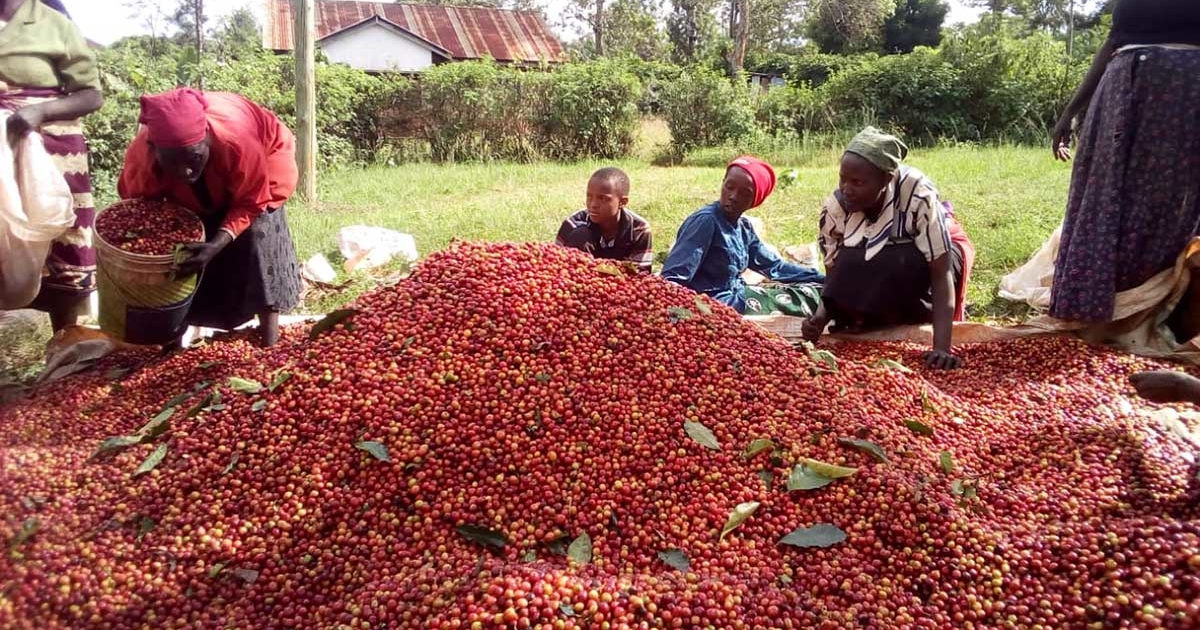
Most Upendo Kenya Coffee comes from small-scale farmers organised into cooperatives across Central, Nyanza, and the Taita Hills.
Our farmer commitments
Direct, transparent, generational.
- Above-market premiums - we pay a quality premium on every AA-grade lot, paid directly to the cooperative.
- Full traceability - every Upendo Kenya Coffee container ships with origin documents identifying the cooperative, region, and harvest window.
- Phytosanitary certified - every export lot meets Kenya Plant Health Inspectorate Service standards before leaving Mombasa.
- Year-round training - agronomy, cup-tasting, and processing workshops for partner cooperatives.
Health & Safety
Phytosanitary certified. Stored airtight, cool, and dry.
Upendo Kenya Coffee is dried to an ideal 11% moisture content - the level required for proper long-term storage, hulling and roasting in Kenya - and stored in airtight containers in dry, cool warehouses prior to shipment.